

.jpg)
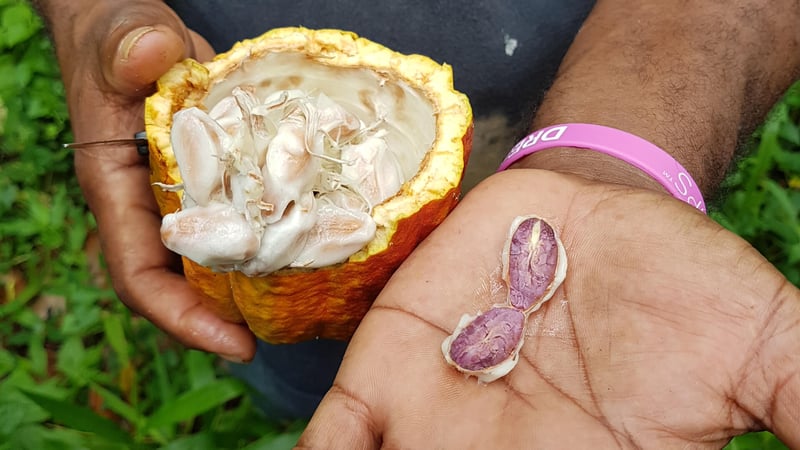
Cocoa beans are at the heart of every chocolate product we enjoy today. Whether you enjoy the rich intensity of dark chocolate or the smooth sweetness of milk chocolate, each bar begins with one essential ingredient — the cocoa bean.
But how does it transform into the treat we know today?
Learn More: From Cocoa Tree to World: Where Does Chocolate Come From?
The answer goes beyond cultivation. While cocoa quality begins in the field, it is ultimately shaped after harvest. From fermentation and drying to storage and transport, each stage determines whether quality is preserved — or permanently compromised.
Even the finest cocoa varieties, grown under optimal conditions, can lose their potential if post-harvest handling is not properly managed. Moisture exposure, inconsistent fermentation, poor drying practices, and inadequate storage can lead to mold, off-flavors, and contamination, reducing both bean quality and market value.
The most common sources of cocoa quality loss include fermentation errors, poor storage conditions, and improper transport handling.
Identifying where quality loss occurs is the first step toward preventing it and improving overall cocoa outcomes.
Common Post-Harvest Mistakes in Cocoa Handling
1. Improper Fermentation and Drying
Fermentation and drying are the most critical stages in developing cocoa flavor and aroma. When poorly managed, defects formed here cannot be corrected later in the supply chain.
Fermentation Errors: Ending the process prematurely or failing to turn the beans regularly prevents the breakdown of bitterness and astringency.
Exposure to Humidity: Because cocoa beans are hygroscopic, leaving them exposed to humid conditions during drying or storage can lead to moisture reabsorption and an increased risk of spoilage.
Safe Moisture Levels: Drying beans inadequately — leaving moisture levels above the safe 6–8% threshold — creates a breeding ground for molds and free fatty acids (FFA). Conversely, drying too quickly can case-harden the shell, trapping acids inside and ruining the flavor profile.
Learn more: Why Moisture Is Bad For Cocoa Beans
2. Poor Cocoa Storage
Even well-dried beans remain highly sensitive. Traditional storage methods often fail to protect the beans from environmental shifts.
The Flaw of Traditional Bags: Using traditional jute or gunny sacks allows for moisture reabsorption and provides no barrier against insect infestation.
Odor Contamination: Because cocoa butter is highly absorbent, storing beans near fuels, chemicals, or smoke leads to irreversible "off-notes" that lower the grade of the crop.
Mold and Mycotoxins: Poorly ventilated, damp warehouses can trigger mold growth, leading to contamination risks like Aflatoxins. These are harmful toxins produced by certain molds that can pose serious food safety risks.
3. Poor Handling and Transport Conditions
Transport is a high-risk control point where "external" humidity can ruin a "perfect" batch.
Container Rain: This occurs when moisture evaporates from the beans or wood flooring in a shipping container, condenses on the cold ceiling, and drips back onto the cargo.
Protective Barriers: Without a hermetic barrier or container liner, beans are exposed to fluctuating humidity levels during transit, often arriving at their destination with mold damage despite being shipped dry.
By identifying common post-harvest mistakes, losses in both quality and quantity can be significantly reduced. With the right practices and solutions in place, cocoa quality can be consistently protected across post-harvest.
Best Practices for Cocoa Bean Quality Protection
Protecting cocoa bean quality requires a consistent approach across all post-harvest stages, especially as producers face climate change, supply volatility, and market pressures.
Sustainable practices are not only about avoiding mistakes but also about building resilience into the system to ensure consistent quality under changing conditions.
1. Ensure Proper Fermentation and Drying
Fermentation and drying are the foundation of cocoa quality and must be carefully managed as interconnected stages.
Controlled Fermentation: Use appropriate fermentation systems and ensure regular turning of beans to promote uniform microbial activity and consistent flavor development.
Moisture Management: Monitor fermentation duration closely to avoid under- or over-fermentation, both of which can negatively affect flavor complexity.
Safe Drying Levels: Dry beans gradually to a stable moisture content of around 6–8% to prevent mold growth and free fatty acid development.
Airflow Optimization: Use raised beds and clean drying surfaces to ensure continuous airflow, allowing moisture to evaporate evenly and preventing clumping or uneven drying
2. Proper Storage
Once dried, cocoa beans enter the storage stage and remain highly sensitive to moisture reabsorption.
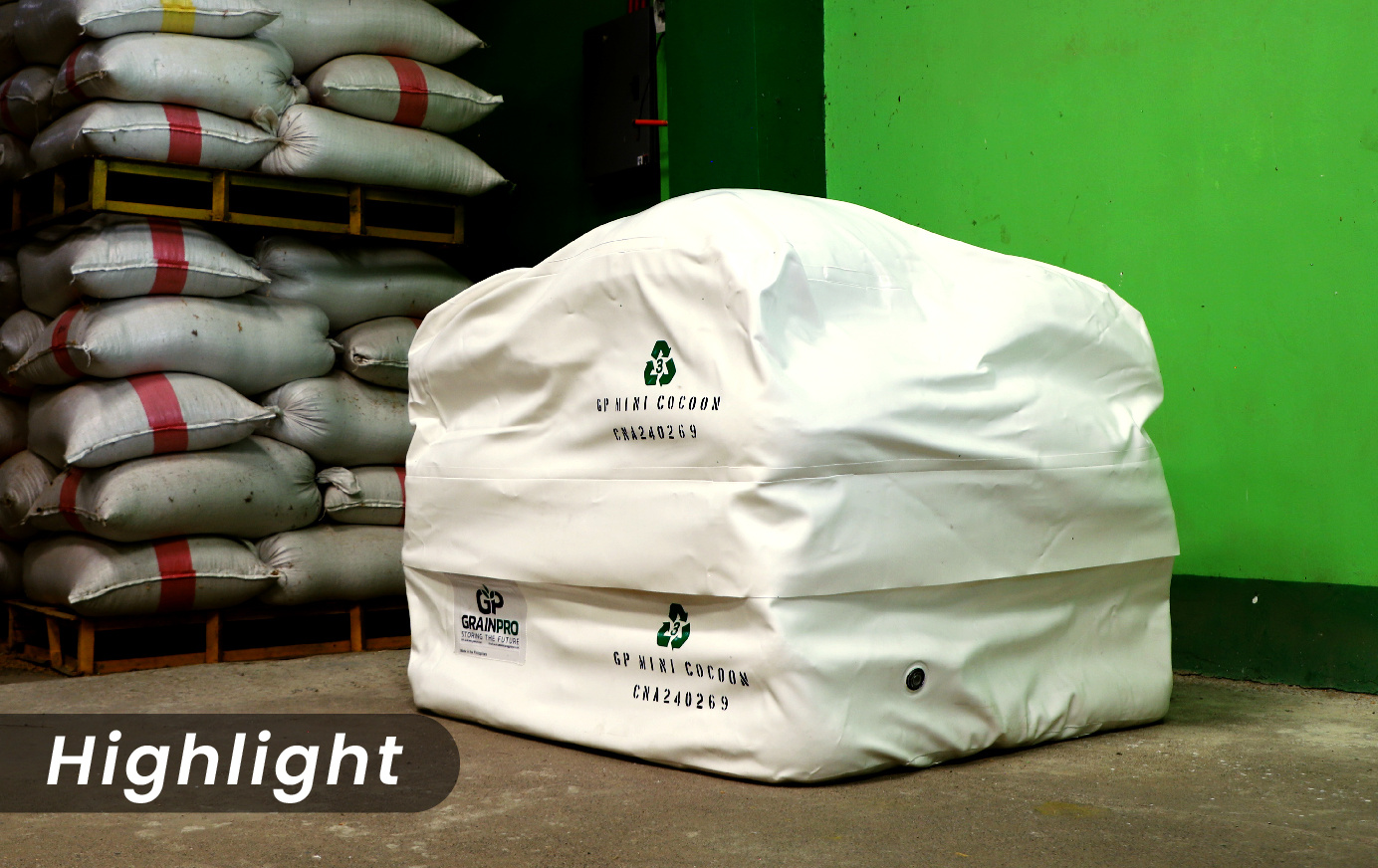
Moisture Protection: Use airtight, moisture-resistant storage solutions to prevent humidity reabsorption, mold formation, and fungal growth without relying on chemical treatments.
Sanitary Storage Conditions: Store beans in clean, dry, and well-maintained facilities to reduce exposure to environmental contaminants.
Elevation from Surfaces: Keep bags elevated from floors and walls to minimize contact with damp surfaces and reduce the risk of localized moisture damage.
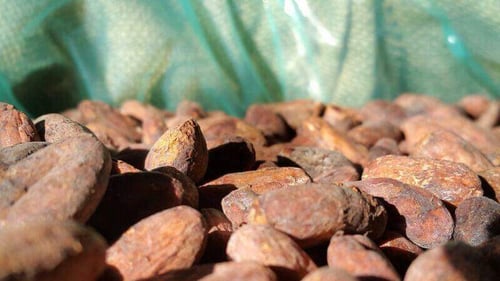
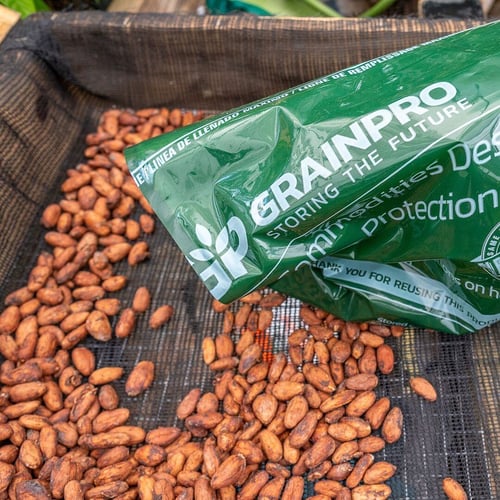 In the photo: cocoa beans in the old (1) and new (2) GrainPro bag designs.
3. Moisture- and Contamination-Free Transport
During transport, cocoa beans must be protected from humidity, condensation, and external contaminants that can compromise quality.
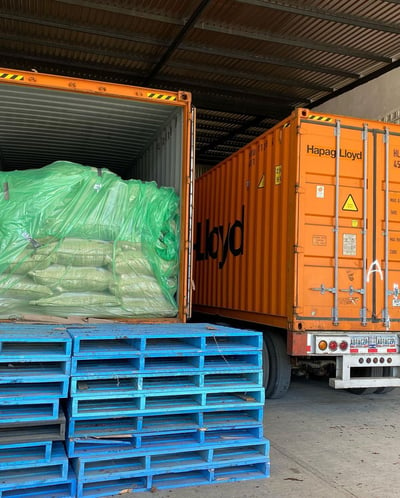 Protective Packaging Systems: Use appropriate protective packaging and ensure beans are fully covered during handling and transit to reduce exposure to external humidity.
Container Hygiene Control: Keep transport containers clean, dry, and free from odor-emitting or contaminating substances that can affect bean integrity.
Condensation Prevention: Install protective barriers such as container liners inside shipping containers to minimize humidity fluctuations and prevent condensation buildup (“container rain”), ensuring beans arrive in stable condition.
Ultimately, the quality of cocoa beans — and the chocolate they become — depends not only on how they are grown, but on how well they are protected after harvest. By avoiding common post-harvest mistakes and adopting consistent, climate-resilient practices, producers and supply chain stakeholders can preserve bean integrity, maintain market value, and ensure that cocoa reaches its destination in optimal condition.
Learn more: How Hermetic Technology Enhances the Value of Cocoa Beans
In a changing global landscape, safeguarding cocoa quality is not just a best practice — it is an essential step toward building a more reliable and sustainable cocoa supply chain.

Date Published: May 11, 2026
Share this article