



Cocoa is one of the world's most valuable agricultural commodities, prized for its flavor, quality, and economic value.
However, cocoa beans are naturally hygroscopic and readily absorb moisture from the surrounding environment. Without effective post-harvest solutions to manage moisture, cocoa beans can develop mold during shipping, leading to quality deterioration and significant economic losses.
Protecting cocoa beans has become increasingly important, as global cocoa demand grows alongside the USD 150 billion chocolate industry. The current cocoa market relies on a supply chain that starts from producing regions near the equator to top consumers in temperate climates.
Shipments travel long distances and often encounter conditions that lead to mold growth and other moisture-related damage. While the effects on cocoa quality and value are significant, mold growth is largely preventable.
Understanding what causes mold growth is the first step toward preventing moisture-related damage during cocoa shipping.
Direct Answer Summary
Cocoa beans develop mold during shipping primarily due to excess moisture caused by improper pre-shipment drying, cargo condensation caused by temperature fluctuations, and inadequate moisture protection inside shipping containers. To prevent mold growth, cocoa beans must be dried to the recommended ~7% moisture content, paired with moisture-management practices, and using airtight hermetic container liners like the GrainPro® TranSafeliner™ to block external humidity.
What Causes Mold Growth in Cocoa Beans During Shipping?
Mold growth during cocoa shipping is primarily caused by excess moisture resulting from improper drying, unfavorable transit conditions, and inadequate moisture protection.
Improper Drying Before Shipment
Improper drying leads to excess moisture, creating favorable conditions for mold growth and quality deterioration. Cocoa beans should be dried to the recommended moisture content of around 7% to ensure safe transport.
Condensation During Transit
Condensation occurs when warm, humid air comes into contact with a cooler surface, causing water vapor to condense into liquid droplets. This can raise the moisture content of cocoa beans, which promotes mold growth, microbial activity, and increased free fatty acid (FFA) formation during shipping.
Inadequate Moisture Protection
Without adequate moisture protection, cocoa beans are left exposed to external conditions during transit, including humidity, condensation, and changing weather conditions that increase the risk of mold growth.
Best Practices to Prevent Mold During Cocoa Shipping
Preventing mold growth requires addressing the same factors that cause it. Following these practices can reduce moisture-related risks, maintain cocoa quality, and protect the value of every shipment.
Achieve Recommended Moisture Content
Cocoa beans should be properly dried before shipment to reduce mold growth and moisture-related damage during transport. Proper drying is a slow process that typically takes 5-7 days, allowing cocoa beans to complete essential biochemical reactions and reach around 7% moisture content.
Minimize Condensation Factors During Transit
Condensation can be minimized by reducing excess moisture inside the shipping container before and during cocoa transport. Reaching the recommended moisture content helps limit the amount of moisture that can evaporate during temperature fluctuations, reducing the likelihood of condensation and mold growth. Container desiccants, such as calcium chloride, can be used as a complementary measure to absorb excess moisture from the air.
Use Effective Moisture Protection
Hermetic container liners are recommended as part of a comprehensive post-harvest strategy to help preserve cocoa quality during shipping. The liners are installed before loading, providing a reliable layer of protection that helps reduce moisture-related risks throughout transit.
While hermetic container liners are widely recommended for protecting cocoa during transit, understanding how they help prevent mold is equally important.
How Do Hermetic Container Liners Help Prevent Mold During Shipping?
To understand how hermetic container liners help prevent mold during shipping, it is first important to understand the principles of Hermetic Technology.
Hermetic Technology is a time-tested preservation concept that utilizes airtightness to prevent air and moisture exchange. This creates a controlled environment that naturally decreases oxygen levels and minimizes moisture migration.
Hermetic container liners apply this principle by creating a stable internal environment that is less affected by external humidity and temperature fluctuations. As a result, conditions become less favorable for mold growth and other forms of quality deterioration during shipping.
GrainPro® TranSafeliner™: A Solution to Cocoa Bean Shipping
The GrainPro® TranSafeliner™ is a hermetic container liner made from a multilayer film with airtight and moisture-proof properties.
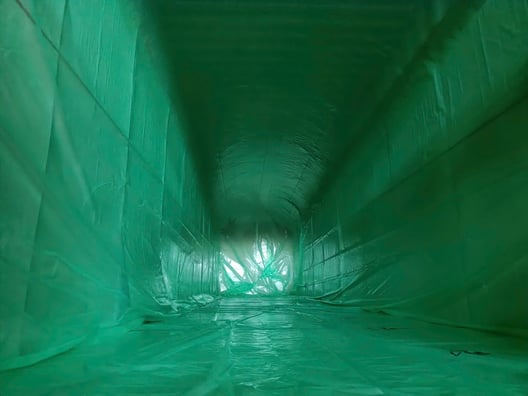
In Photo: Installed GrainPro® TranSafeliner™ before loading.
Designed for shipping cocoa beans and other dry agricultural commodities in bags or on pallets, it helps reduce the risk of mold growth by protecting against external moisture, humidity, and temperature fluctuations during long-distance transit.
As a result, it helps preserve product quality while reducing the risk of moisture-related losses.
Mold growth during cocoa shipping is preventable through proper post-harvest practices and moisture-management solutions. Beyond preventing mold, effective post-harvest protection helps preserve cocoa quality, reduce losses, and ensure every shipment arrives in optimal condition.
Looking to better protect your cocoa shipments? Explore GrainPro's complete range of post-harvest and transport solutions designed to preserve quality from storage to destination.


Date Published: September 21, 2026
Share this article